
Book a demo

Solutions
Regulatory Documentation
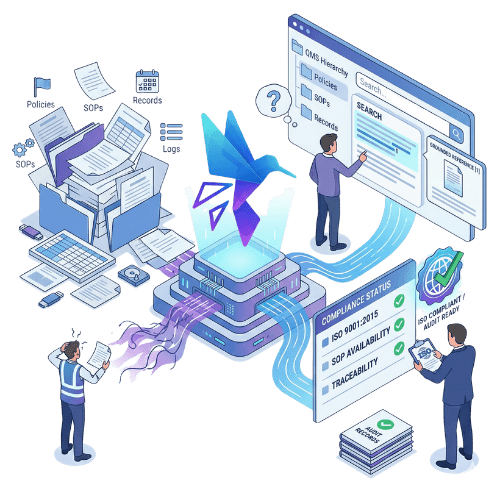
Doclarity.ai helps teams organize the regulations, policies, circulars, procedures, filings, and evidence they rely on to stay compliant. Turn scattered documents into a searchable, source-backed working library for faster review, clearer obligations, and better follow-through.
Book a demo
See How It Work.

Built for compliance, regulatory, risk, operations, and documentation teams that work with large volumes of controlled documents.
Why it matters
Regulatory and compliance work often depends on files scattered across folders, inboxes, shared drives, and individual desktops. Teams spend too much time searching for the latest text, comparing versions manually, extracting obligations by hand, and rebuilding the same evidence packs every time a review, request, or deadline appears.
Doclarity gives your team a controlled document environment built from your own authoritative sources. Upload the regulations, internal policies, circulars, procedures, reports, and supporting records you rely on. Then use AI-powered search, research, and writing tools to retrieve what matters, trace answers to sources, and turn documentation into action. Work faster, miss less
Outcomes
Keep regulations, circulars, internal policies, procedures, notices, reports, evidence files, and supporting records in one structured library instead of scattered repositories.

Ask questions in plain language and retrieve grounded answers with source references, instead of manually opening file after file.
Use AI-assisted workflows to extract duties, deadlines, responsible actors, and supporting passages from your document set.
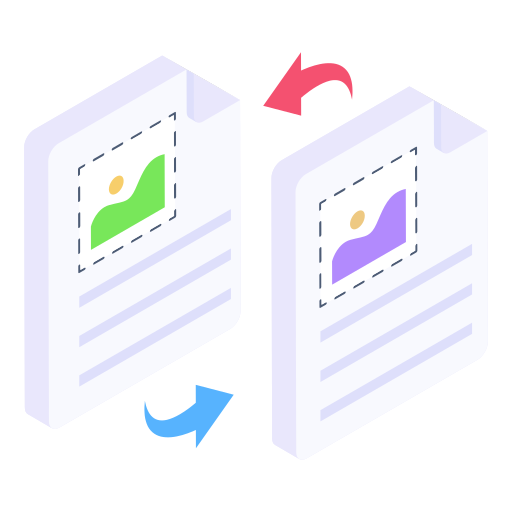
Compare older and newer texts, generate change summaries, and reduce the risk of missing important updates hidden in dense documentation.
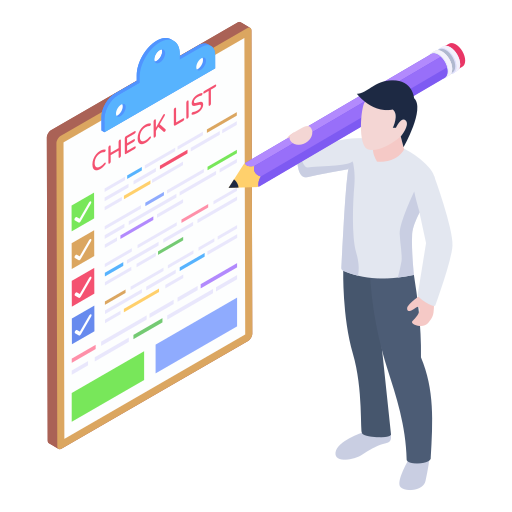
Pull together the documents, findings, and evidence needed for internal reviews, audits, reporting cycles, and management follow-up.

Use shared workspaces, controlled access, and exportable outputs so legal, compliance, quality, operations, and management teams can work from the same source base.
Capabilities
Bring together the regulatory and internal documents your team actually relies on, including PDFs, DOCX files, text files, images, and scanned records.
Identify duties, deadlines, actors, and compliance requirements from source documents and turn them into more usable working outputs.
Compare versions of regulations, circulars, procedures, or policy texts to surface additions, edits, and deletions more clearly.
Make it easier to spot entry-into-force dates, review dates, response deadlines, and filing milestones buried in documents.
Use semantic and hybrid search to ask complex questions across your library and navigate back to the underlying source passages.
Find the supporting records, reports, approvals, and policy references you need for reviews, audits, or internal checks.
Share documents with specific users or workspaces, manage access with role-based permissions, and collaborate without losing control of the source base.
Generate and export summaries, annotated outputs, research threads, and written documents in common formats such as DOCX and PDF.
Workflow
Create a controlled library from the documents your team actually uses: laws, regulations, circulars, internal policies, procedures, filings, reports, correspondence, and evidence records.
Use semantic and hybrid search to ask natural-language questions, retrieve relevant passages, and locate the exact documents behind the answer.
Use research threads, AI writing, and expert workflows to create summaries, obligation registers, change logs, review notes, compliance memos, and action lists.
Work inside shared workspaces, keep access controlled, and export outputs for internal review, management reporting, or audit preparation.
Teams
This solution is especially relevant for small to mid-sized teams that need to stay on top of changing requirements, internal controls, and supporting evidence without building a heavy enterprise compliance stack.
 Compliance Officers Regulatory Affairs Teams Risk and Internal Control Teams Quality and QHSE Teams Operations Teams with compliance responsibilities Documentation and Knowledge Management Leads
 In regulatory and compliance documentation, trust depends on source control. Doclarity is built around your own curated document library, so your team works from the regulations, policies, procedures, records, and evidence you decide to include.
That means better reliability, clearer traceability, and fewer surprises. Instead of asking an AI to improvise from the open web or unstable external systems, your team works from controlled documents, source-backed retrieval, and a shared workspace designed for serious document work.
 Your documents, your control Source-backed answers and research Better reliability for compliance-heavy teams
 FAQ
No. Doclarity helps teams organize, search, compare, and work with regulatory and compliance documents more effectively. It supports documentation workflows; it does not replace legal judgment or formal regulatory advice.
Yes. Doclarity is designed around your own curated document library, including internal policies, SOPs, procedures, reports, evidence files, and other controlled records.
Yes. Teams can upload PDFs, DOCX files, text files, images, and scanned documents, with OCR support for image-based files.
Yes. Teams can use the platform’s document processing, search, and AI-assisted workflows to compare versions, review changes, and create clearer summaries of what was added, edited, or removed.
Yes. Documents can be kept private, shared with selected users, or managed inside workspaces, with role-based access control supporting more controlled collaboration.
Yes. Research and written outputs can be exported in formats such as DOCX and PDF for internal circulation and review. View full FAQ
Solutions
Stop losing time in folders, email threads, and manual comparisons. With Doclarity.ai, your team can centralize compliance documentation, retrieve grounded answers faster, track what changed, and turn document review into practical action. Build Your Private Library See How It Work.
 Private Secure Sovereign