
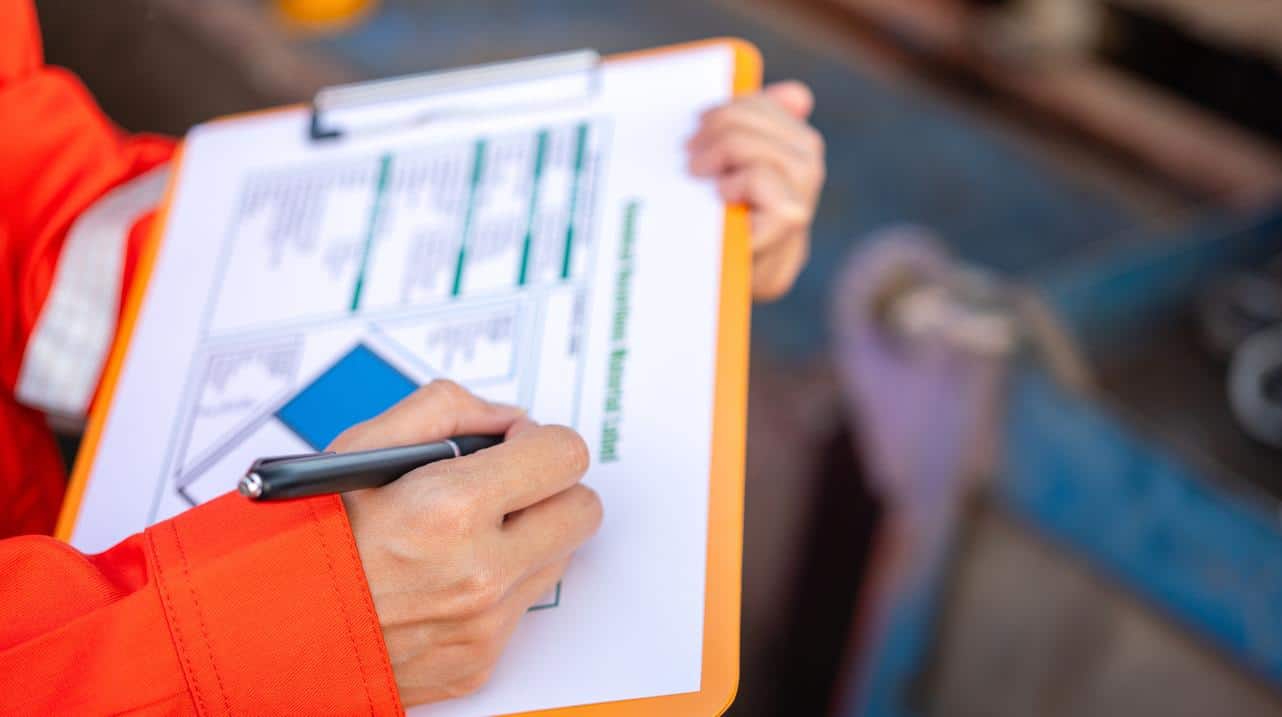
Field reports often contain the signals that matter most, but they are buried in dozens of PDFs, notes, and inconsistent formats.
Use Cases & Playbooks
Field reports are often where reality shows up first. They capture what teams are seeing on the ground before it becomes a dashboard trend, a formal review, or a strategic concern. They reveal delays, recurring obstacles, implementation friction, local risks, unexpected outcomes, and the difference between what a program was designed to do and what is actually happening in practice. That makes them extremely valuable. It also makes them difficult to use well. Because in most organizations, field reporting does not arrive as one clean narrative. It arrives as a stream of PDFs, Word documents, templates, scans, notes, partner submissions, handwritten observations, and inconsistent summaries produced by different people in different places under different constraints. By the time leadership needs a clear view, the issue is not whether the information exists. The issue is whether anyone can extract the signal fast enough to make it useful. That is where AI can help. Not by replacing human interpretation. Not by flattening nuance into generic summaries. But by helping teams retrieve, compare, synthesize, and structure field reporting into something that can actually support action.
Why field reports are so hard to use at scale
Field reports are rarely weak because teams on the ground are not doing the work. They are hard to use because the reporting layer becomes fragmented faster than the organization can absorb it. Some reports are detailed. Others are brief. Some follow the template. Others improvise. Some include valuable qualitative observations. Others focus only on formal indicators. One office may write clearly. Another may send partial scans. A third may mix operational detail with contextual commentary that matters, but is difficult to index later. Over time, this creates a familiar problem. HQ, program leads, research teams, or monitoring and evaluation teams end up asking the same questions:What are the main issues emerging across locations?
- Are the same problems appearing repeatedly?
- Which risks are isolated, and which are systemic?
- What changed this quarter compared with the last one?
- What should leadership pay attention to first?
- What can we actually say with confidence from the documents we have?
The difficulty is not only retrieval.
It is synthesis.
And synthesis is usually where teams lose the most time.
The real bottleneck is not reporting. It is conversion.
Many organizations are actually rich in field information.
What they are poor in is conversion.
They can produce reports. They can store reports. They can circulate reports.
But turning reports into clear internal briefs, management notes, donor updates, decision memos, or cross-site summaries is where the friction grows.
That friction matters because a field report on its own is rarely the final output leadership needs. What leaders need is a brief that answers questions such as:
- What is happening?
- Why does it matter?
- Where is it getting worse or improving?
- What evidence supports this view?
- What do we recommend next?
Getting from dozens of documents to that level of clarity usually requires someone to manually read, compare, organize, summarize, and rewrite the same information across multiple cycles.
That is slow, exhausting, and difficult to repeat consistently.
Where AI actually helps with field-report workflows
There is a lot of generic talk about AI summarization.
That is not the most useful frame here.
The real value appears when AI helps teams with specific bottlenecks inside multi-document reporting workflows.
Bringing scattered reports into one searchable working set
Field reports are often spread across folders, emails, partner submissions, and periodic archives. AI becomes useful when teams can work across a bounded library instead of reopening every document one by one.
Synthesizing recurring patterns across reports
The most valuable insight is often not in one report. It appears across many reports. AI can help surface recurring themes, operational frictions, repeated risks, and shared observations that are easy to miss when documents are read in isolation.
Preserving qualitative insight
A lot of important field knowledge is qualitative. It sits in narrative sections, remarks, comments, or contextual notes that dashboards ignore. AI can help teams retrieve and synthesize those parts rather than losing them in the reporting process.
Producing faster first-draft briefs
A team still needs human judgment, but AI can reduce the time required to move from document collection to structured first draft, especially when the brief needs to summarize evidence across many sources.
Keeping the answer tied to the source material
This matters more than speed. In serious knowledge work, the value is not just getting a summary. It is being able to trace the summary back to the reports it came from.
What this looks like in practice
The strongest use of AI in this context is not an open-ended chatbot with no boundaries.
It is a controlled synthesis workflow.
The team gathers the relevant field reports into a defined working library: monthly reports, partner updates, monitoring notes, mission reports, site visit summaries, situation reports, or program updates. That source set becomes the base for retrieval and synthesis.
From there, the team can ask practical questions such as:
- What challenges are appearing most often across this reporting period?
- Which locations mention delays related to staffing, procurement, or access?
- What qualitative observations recur even when metrics look stable?
- How does this quarter compare with the previous one?
- Which themes deserve escalation to leadership?
- What evidence supports the recommendation in this draft brief?
- Which reports mention the same operational problem in different language?
This changes the nature of the work.
Instead of manually hunting through files and stitching together excerpts by hand, the team can spend more time evaluating the meaning of the patterns and less time reconstructing them from scratch.
A better workflow from report to brief
In practice, the process becomes much cleaner:
Step 1: build the report library
Gather the relevant reporting set for the period, program, geography, or issue.
Step 2: clean the source base
Separate drafts from final reports, reduce duplication, and keep the library focused on the documents that should actually inform the brief.
Step 3: interrogate the reporting corpus
Use AI to retrieve themes, compare locations, surface recurring concerns, and identify where the strongest evidence sits.
Step 4: generate a structured first draft
Turn the synthesis into a brief format leadership can use: key findings, supporting evidence, major risks, implications, and recommended next steps.
Step 5: review, refine, and stand behind it
Human reviewers validate the interpretation, sharpen the framing, and make sure the final brief reflects the organization’s judgment rather than just the machine’s fluency.
Why this matters for leadership teams
Leadership does not usually need more raw reporting.
It needs decision-ready understanding.
A good field brief does not merely repeat what the reports said. It makes the material usable. It clarifies what deserves attention, what can wait, what is emerging, what is repeating, and where additional action or verification is needed.
That is why the ability to move from reports to briefs matters so much.
When this step is weak, leadership receives either too much detail or too little substance. It gets a stack of reporting that nobody has synthesized properly, or a polished summary that sounds clean but is disconnected from the source evidence.
Neither is good enough.
The goal is not to reduce complexity until nothing meaningful remains. The goal is to preserve the useful complexity while making it navigable.
The biggest win is not summarization. It is grounded synthesis.
This is the point many AI workflows get wrong.
A field-report brief should not just be shorter than the underlying reports. It should be more usable without becoming less reliable.
That requires grounded synthesis.
Grounded synthesis means the output remains visibly connected to the reporting base. It reflects the real documents, not generic assumptions. It allows the team to inspect where findings came from. It makes it easier to challenge an interpretation, verify a statement, and refine a recommendation.
That is the difference between a summary that sounds plausible and a brief a team can actually use in a decision process.
Why generic AI often fails here
A public AI tool can write a polished briefing note very quickly.
That does not mean it understands the reporting environment.
Without controlled sources, it may smooth away important differences, overstate confidence, miss recurring qualifiers, collapse separate issues into one theme, or produce generic language that sounds strategic but says very little. It may also give the impression of coherence where the source material is actually mixed, partial, or contradictory.
That is dangerous.
Because field reporting often contains ambiguity, uneven evidence, and context-specific observations that should not be oversimplified. A tool that prioritizes fluency over source discipline can make the final brief sound better while making it less trustworthy.
For teams doing serious synthesis work, that is not an acceptable trade.
The specific tasks AI can improve
Teams usually get the most value when they use AI for recurring synthesis tasks such as these:
1. Multi-report theme extraction
Identify repeated concerns, recurring barriers, or common operational signals across many reports.
2. Cross-location comparison
Compare how similar issues appear across regions, projects, offices, or reporting periods.
3. Narrative evidence retrieval
Pull qualitative observations out of narrative sections that are otherwise difficult to review at scale.
4. Brief drafting
Create a structured first draft with findings, implications, and evidence-backed talking points.
5. Donor or management reporting support
Help teams move from operational reporting to donor-facing or leadership-facing outputs more efficiently.
6. Reporting continuity over time
Track what is newly emerging, what is persistent, and what has changed between reporting cycles.
A practical example
Imagine a program or research team preparing a quarterly leadership brief from fifty field reports.
Each report contains useful information, but not in the same format. Some focus on incidents. Some emphasize progress. Some include strong contextual commentary. Others are sparse but still contain one or two critical observations. The team knows important patterns are in the reporting set, but extracting them manually takes days.
Without a strong workflow, the team ends up doing the same labor every cycle:opening files, scanning text, copying quotes, grouping issues manually, rewriting rough notes into management language, and worrying that something important was missed.
With a controlled AI-assisted workflow, the team can ask much sharper questions:
- What are the top five recurring operational challenges in this quarter’s reports?
- Which locations reported access problems more than once?
- Where do field officers describe the same issue in different terms?
- Which narrative observations suggest emerging risk before it appears in the indicators?
- What evidence supports a recommendation to escalate this issue now?
- How should we structure the key findings section of the brief?
That does not replace the analyst or program lead.
It gives them a much better starting point and a much clearer evidence trail.
What teams should not expect from AI
AI can help turn field reports into actionable briefs, but it should not be treated as a substitute for interpretation.
It does not replace contextual judgment. It does not determine strategic priorities by itself. It does not know which nuance matters politically, operationally, or institutionally unless humans review the result. It does not eliminate the need for source checking. It does not turn weak reporting into strong reporting.
What it can do is reduce the retrieval burden, accelerate synthesis, preserve more of the signal in the documents, and help teams produce usable briefs with less manual friction.
That is already a significant gain.
What better reporting-to-brief conversion looks like
A strong team should not have to rebuild its understanding from zero every reporting cycle.
It should be able to work from a living, searchable, evidence-based reporting library that makes synthesis easier over time.
That means:
- reports are easier to retrieve and compare,
- recurring themes surface faster,
- narrative evidence is easier to preserve,
- brief drafting becomes less manual,
- the path from observation to recommendation becomes clearer,
- and leadership receives something more useful than either raw documents or vague abstraction.
That is where AI becomes genuinely valuable in research and field-report workflows.
Not as a shortcut around thought. As an accelerator for thought.
Closing section
Field reports are only as useful as the organization’s ability to turn them into action.
When they remain trapped in folders, they become archival weight. When they are synthesized carelessly, they become polished noise. When they are turned into structured, grounded briefs, they become operational intelligence.
That is the opportunity.
Used well, AI helps teams move from scattered reporting to clearer synthesis, faster briefing, and better-supported decisions.
And for document-heavy teams, that shift is often where the real value begins.



 Private